Top 10 chicken questions answered
It’s getting easier for people outside the
backyard poultry community to understand why so many of us choose to
dedicate a portion of our lives to raising and caring for chickens. I
don’t get the same reaction I used to from suburbanites when they find
out I raise chickens through casual conversation. Instead most people
end up telling me about someone in their neighborhood that is raising a
few chickens. In fact, it has become quite easy to influence outsiders
to take part in this “unusual” hobby simply by telling a story or two

This hilarious sign was posted shortly after Byron’s dog was chased around the backyard by one of his chickens. |
|
about our beloved chickens and their unforgettable antics.
Let’s
face it, stories about dogs and cats are about as interesting as a glass
of warm water and dry toast for dinner. Who hasn’t heard the one about
the dog that chased its tail? It’s not that it wasn’t funny but I
suspect your audience has seen this behavior before. Now tell the story
about the rooster that chased your screaming mother-in-law around the
backyard, suddenly people become very interested in what you are saying.
You’ll still have plenty of opportunity to talk about your dog when you
raise chickens as the two can produce some entertaining and crowd
pleasing stories, provided the story doesn’t end with the dog eating the
chicken. I remember sitting on he back porch with my wife enjoying an
ice cold drink when my 85-pound dog came running across the backyard
with his tail between his legs and a Buff Orpington roosting on its back
while a Barred Rock chased behind. The chicken on his back quickly
jumped off as Farley (my dog) crawled underneath my chair for protection
and some comforting. I’m not sure how that all got started but since
then we have replaced our “beware of dog” sign with an “Area Patrolled
by Attack Chicken” sign.
A good story doesn’t always have to involve the chicken but rather
the chicken coop. I love to tell the story about my 2-year-old son
getting his head stuck inside our chicken tractor yelling “No! No!” as
the chickens pecked and pulled at his curly blonde hair. Trust me; you
don’t have to make this stuff up! Raise chickens long enough (a few
weeks will do) and you won’t have to look very hard to find a hilarious
story to share.
But it’s not just the stories we share that make people from the
small land owner to the urban adventurer commit to sharing their yard
with a few chickens. It’s not just the fact that more people realize the
health benefits of eggs from backyard hens, not to mention the more
humane lifestyle they are exposed to. Could it then be they are looking
for the blood pressure lowering effects associated with “pet” ownership
that we keep reading about? Or could it be a way for people to escape
back to the good old days by incorporating some of the sights and sounds
we experienced during visits to Grandma and Grandpa’s farm? The real
answer is most—or all—of the above.

After Byron
promised his dog Farley unlimited eggs to snack on, Farley raised his
paw and swore not to hurt the chickens. Byron does not recommend leaving
chickens and dogs unsupervised but he does enjoy watching the playful
interaction between the two while closely monitored. |
|
Most people end up raising chickens after one of three occurrences:
1) Intensive research suggested the positive aspects of raising chickens
outweighed any possible negatives, 2) Dad has trouble saying no to his
kids and came home from a recent trip to the feed store with six
chickens, a toy horse collection, and two bags of candy but forgot the
new shovel he went there for, or 3) Drinking beer while looking at
poultry-related websites.
Conversely, I think the reasons many people don’t raise chickens is
because they believe chickens are strictly farm animals that require a
lot of space, feel they don’t have access to the types of supplies
required, or stay completely sober when surfing the internet. In reality
you don’t need any more room in your backyard for a few chickens than
you do for a dog and you can order a chicken coop, chicken feed, and
most other poultry supplies online 24 hours a day.
But before you wake up with a hangover and an online order of Barred
Rock chicks, let me at least bring forth some answers to the questions
that most people ask before jumping into the backyard poultry arena.
Keep in mind there are experts in the world of poultry like Gail
Damerow, who have written books like The Chicken Health Handbook and
Storey’s Guide to Raising Chickens that can serve as guides into your
new endeavor. However, although I am not qualified to be considered an
expert, I did manage to read both books and have raised, or at least
eaten, chickens most of my life, and spent the last 17 years in the
poultry supply business, so I should be able to provide some unique
insight into the world of backyard chickens.
To help do so, I have polled the operators at Randall Burkey Company
who sell poultry equipment and live chicks on a daily basis and asked
them to help me come up with the top 10 questions asked by people who
are either planning to raise chickens or are new to raising chickens.
Hopefully these turn out to be some of the same questions you might need
answers to. Remember, no question is a dumb question if you don’t know
the answer. I remind myself of that whenever I talk to a mechanic. “The
battery’s dead! Doesn’t my car run off gasoline?”
 Chickens enjoy
foraging for their food and this economical time-release feeder offers
an easy solution when there is less foraging material available.
Chickens enjoy
foraging for their food and this economical time-release feeder offers
an easy solution when there is less foraging material available. |
|
So here are the top 10 questions:
#1. Do I need a rooster for my hens to lay eggs?
Okay, stop laughing! You didn’t always know the answer to this
question. I will tell you that this is the most commonly asked question
we get, so no one should be embarrassed. The answer is no, unless you
want chicks. If you’re just looking for eggs to eat and/or some nice
yard pets, hens minus the rooster can provide you with plenty of farm
fresh eggs without a single crow to wake you up in the morning.
#2. How long do chickens live?
The life expectancy of most standard chicken breeds shielded from
predators and deep fryers can range from 8 to 15 years. There are many
reports of pet chickens living as long as 20 years! With the increasing
popularity of raising chickens as pets, I imagine someone will develop a
new line of chicken coops such as nursing coops or assisted living
coops for the growing population of elderly chickens. All joking aside,
chickens are very hardy animals that rarely need a trip to a
veterinarian, no matter how long they live.
#3. What do I need when my chicks arrive?
Boil some water and grab some clean towels! Isn’t this what we heard
on television when the mother went into labor? However, with newborn
chickens, we only need to boil water if we plan on cooking them. What
you do need is a way to keep your chicks warm without cooking them.
Depending on the number of chicks and your budget there are several
options. Most commonly used and most economical is a single lamp
infrared brooder with a 250-watt red glass infrared bulb. Of course you
will need a perimeter to contain the chicks inside the heated area
—something as simple as an 18″ high corrugated paper chick corral will
get the job done. Place a small thermometer inside to ensure the correct
temperature of 95° F is maintained, dropping 5° each week thereafter. A
proper chick feeder and waterer is also necessary and you should
provide ample space for the number of chicks inside. Pine shavings will
work well as bedding and although there are many other options, you want
to avoid using material such as newspaper that does not provide stable
footing.
#4. At what age do hens start laying and how many eggs will they lay?
Typically hens will start to lay when they are around 5- 6 months of
age and will lay approximately 200 to 300 eggs annually, based on the
breed type. Breeds like Rhode Island Reds, Golden Sex Links, and White
Leghorns are considered some of the most prolific egg layers. Peak
production generally occurs at two years of age and slowly declines
thereafter.

The Egg Cart’n
Mini Byron uses in his backyard has a total of 24 square feet of living
space. It will easily house 4-6 hens or 2 chickens and one 2-year-old
boy. |
|
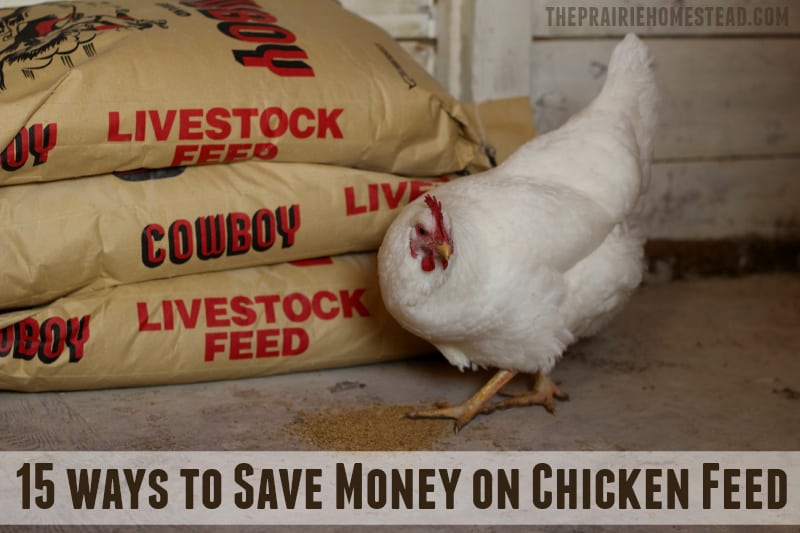
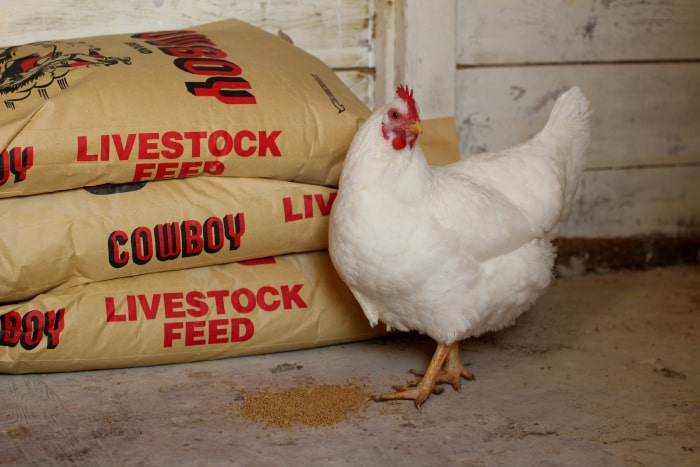
#5. How much feed do chickens eat?
The amount of feed a chicken will consume varies dramatically based
on breed type, feed quality, climate, and other variables that make it
difficult to provide one good answer. However, a typical laying hen will
consume around 4 to 6 ounces of feed each day with an increase during
cold months and a decrease during warm months.
Many types of feeders
available today are designed to prevent feed from being scratched out to
reduce wasted feed and lower your overall feed bill. Depending on where
you are located, your chickens can nearly survive strictly by foraging
for their food on a good size piece of property. Foraging for food is
really the chickens’ preferred method of eating because it makes life
much more interesting for them as opposed to standing around the
all-you-can-eat food trough.
Even during the leaner times you can
promote natural foraging behavior by hanging a “Free Range” feeder in
your yard. With a timer that can be set to release varying amounts of
pelletized feed, you can provide your chickens the sustenance they
require while still allowing them the opportunity to act upon their
natural instincts.
#6. How big does my chicken coop need to be?
Because chickens spend most of their active time outside of the
chicken coop, generally 2 – 3 square feet per chicken is sufficient
space. Remember, you will need to provide space to roost at night and
space for the nesting boxes. If you plan on keeping them cooped up
full-time then 8 – 10 square feet per chicken would do, counting the
outside run. In this case, more is always better. If you are planning on
buying or building a mobile chicken coop, space requirement is
minimized because it offers you the ability to frequently move the coop
and chickens onto fresh ground.

Don’t let a slick
nest box salesman sell you more than you actually need. This six-hole
nest box will easily accommodate up to 24 hens. |
|
#7. How many nest boxes will I need for my hens?
If you asked a slick nest box salesman, he would probably tell you
the answer is one box for every hen and then tell you how much he likes
you and how he is willing to give you a great deal if you buy today.
Fortunately, I don’t think there are many “nest box salesmen,”
especially slick ones. However, there are plenty of poultry supply
companies that sell nest boxes and the answer they should give you is
approximately one nest box for every 5 – 6 hens. Now this can, and does,
vary somewhat but the point is this, if you have 25 hens you don’t need
to purchase 25 individual nest boxes. In fact, one six-hole nest box
would probably be sufficient for 25 laying hens, or 6 extremely pampered
laying hens.
#8. What is the best way to deal with internal and external parasites?
Because we are dealing with an animal that we may eat or eat the eggs
from, I prefer to recommend the more natural alternatives for treatment
opposed to chemical use. “Food grade” diatomaceous earth (DE) is the
fossilized remains of microscopic shells created by one-celled plants
called diatoms and is the most popular natural product for controlling
internal and external parasites. Chickens can be dusted with DE to treat
lice and mites, and it can be mixed with their feed to control worms.
Another alternative all-natural product is Poultry Protector, used to
control external parasites such as mites, lice, and fleas. Poultry
Protector uses natural enzymes to control parasites and can be sprayed
in all areas of the chickens’ living quarters and safely on the birds as
well.

Byron’s friend
Mike sprays Poultry Protector on a Buff Orpington. It’s a non-toxic,
all-natural product safe for use in the coop and directly on chickens to
help clean away mites, lice, and fleas. |
|
#9. What is the best way to protect my chickens from predators?
Obviously, a well-built chicken coop is your first and best defense
against predators. The coop should be designed to prevent predators from
crawling through small openings or from tunneling under. Most
troublesome predators come at night so it may be a good idea to place a
few NiteGuards around your coop. NiteGuard Solar emits a flashing red
light at night that makes predators think they’re being watched by
something more terrifying than they are, forcing them to leave the area,
and preventing predators from ever approaching your coop.
#10. How do I get my chickens to go in the coop at night?
Chickens instinctively move into their coop when the sun goes down.
It may take a little coaxing for grown chickens to move into a newly
built coop but once they realize it’s home, they generally go right in
at night. Your job is to close the door behind them once they enter, and
then to open it back up in the morning. If this sounds like something
you don’t care to constantly deal with, you can buy an automatic chicken
coop door such as the new Poultry Butler Automatic Poultry Door.
Whatever reasons made you decide to start raising chickens,
personally I think you made a great decision, even if it happened to be
alcohol induced. I guarantee you’re going to have some great stories to
tell about your life with chickens, and I wish I could hear every one of
them.
To those of you who already have chickens, don’t forget to pet the
dog every once in a while. If you’re like me, you still love your dog
but wish it were eggs he was laying all over the backyard. Now that
would be a great story!
http://www.backyardpoultrymag.com/straw-hay-backyard-chicken-coop/
By Byron Parker, Randall Burkey Company Texas
Byron Parker will continue to share his experiences with products
used in poultry keeping in future issues of Backyard Poultry. Byron is
employed by Randall Burkey Company
.